The internet has made it easier than ever to build an online presence. But there is one problem: our online identity is often spread across too many places.
A creator might have an Instagram account, YouTube channel, WhatsApp contact, portfolio, online store, and payment page. A business may have even more.
Sharing all those links individually isn't very convenient.
That's where a can help. Instead of asking people to search for you on different platforms, you can give them one link that brings everything together.
For example, an Instagram creator could put one link in their bio that leads visitors to their latest YouTube video, portfolio, WhatsApp contact, online store, and other social profiles.
It sounds simple, but that small change can make the online experience much easier.
The Problem With Sharing Multiple Social Media Links
Imagine you are a photographer and someone finds you through Instagram.
You want that person to:
- See your portfolio
- Watch your latest work on YouTube
- Contact you on WhatsApp
- Check your pricing
- Follow your other social profiles
If you have to send five or six separate links, the experience quickly becomes messy.
The same problem happens with creators, freelancers, influencers, restaurants, small businesses, and online stores.
A person may be interested in your work but leave simply because finding the right link takes too much effort.
The goal of a good link-in-bio page is to remove that friction.
How Link-in-Bio Platforms Make Sharing Easier
A link-in-bio platform lets you create a single page containing your most important links.
Instead of sharing:
Instagram + YouTube + WhatsApp + Website + Store
you can simply share:
yourbrand.com/yourname
Visitors can then choose where they want to go.
A typical bio page might include:
- Instagram profile
- YouTube channel
- Website
- Online store
- Portfolio
- Booking page
- Payment link
- Newsletter signup
This is particularly useful when your social media bio allows only limited space for links.
A simple example
Suppose Priya is a freelance makeup artist.
Instead of putting separate links everywhere, she can create one bio page containing:
Book an Appointment
View Makeup Portfolio
WhatsApp Me
Instagram
YouTube Tutorials
Price List
Now she only needs to share one link on Instagram, Facebook, business cards, and WhatsApp.
Why Creators Use Link-in-Bio Platforms
Creators rarely depend on one platform.
A YouTube creator may also publish Instagram Reels, sell digital products, run a newsletter, and communicate with followers through WhatsApp or Telegram.
Keeping everything connected can become difficult.
A link-in-bio page gives creators one place to organize these destinations.
For example, a creator could place their:
- Latest YouTube video
- Instagram profile
- Online course
- Affiliate links
- Newsletter
- Merchandise store
- Contact information
on one page.
This also makes it easier to change destinations later without changing the link shared in their Instagram or TikTok profile.
Why Mobile-First Design Matters
A large portion of social-media traffic comes from smartphones.
Think about what happens when someone clicks a link in an Instagram bio. They don't want to wait for a complicated website to load or search through several menus.
They want to see the information immediately.
A good link-in-bio page should therefore be:
- Fast to load
- Easy to scroll
- Simple to navigate
- Easy to read on smaller screens
- Designed around clear calls to action
For example, a restaurant could put:
View Menu →
WhatsApp to Order →
Get Directions →
Instagram →
on its bio page.
The customer can find what they need without searching through the entire website.
How Businesses Can Use Link-in-Bio Pages
Link-in-bio tools aren't only for influencers.
Small businesses can use them as a simple digital hub for their most important customer actions.
A business might include:
- Product catalog
- WhatsApp support
- Appointment booking
- Website
- Google Maps
- Online payment
- Social media
- Special offers
Example: A clothing boutique
Imagine a fashion store promoting a new collection on Instagram.
Instead of sending customers to the homepage and asking them to find the collection, the store can use its bio page to show:
New Collection
Shop Online
WhatsApp Us
Store Location
Instagram
Customer Reviews
This creates a much more direct path from social media to the customer's next action.
QR Codes Make Link Sharing Even Easier
The usefulness of a link-in-bio page doesn't stop with social media.
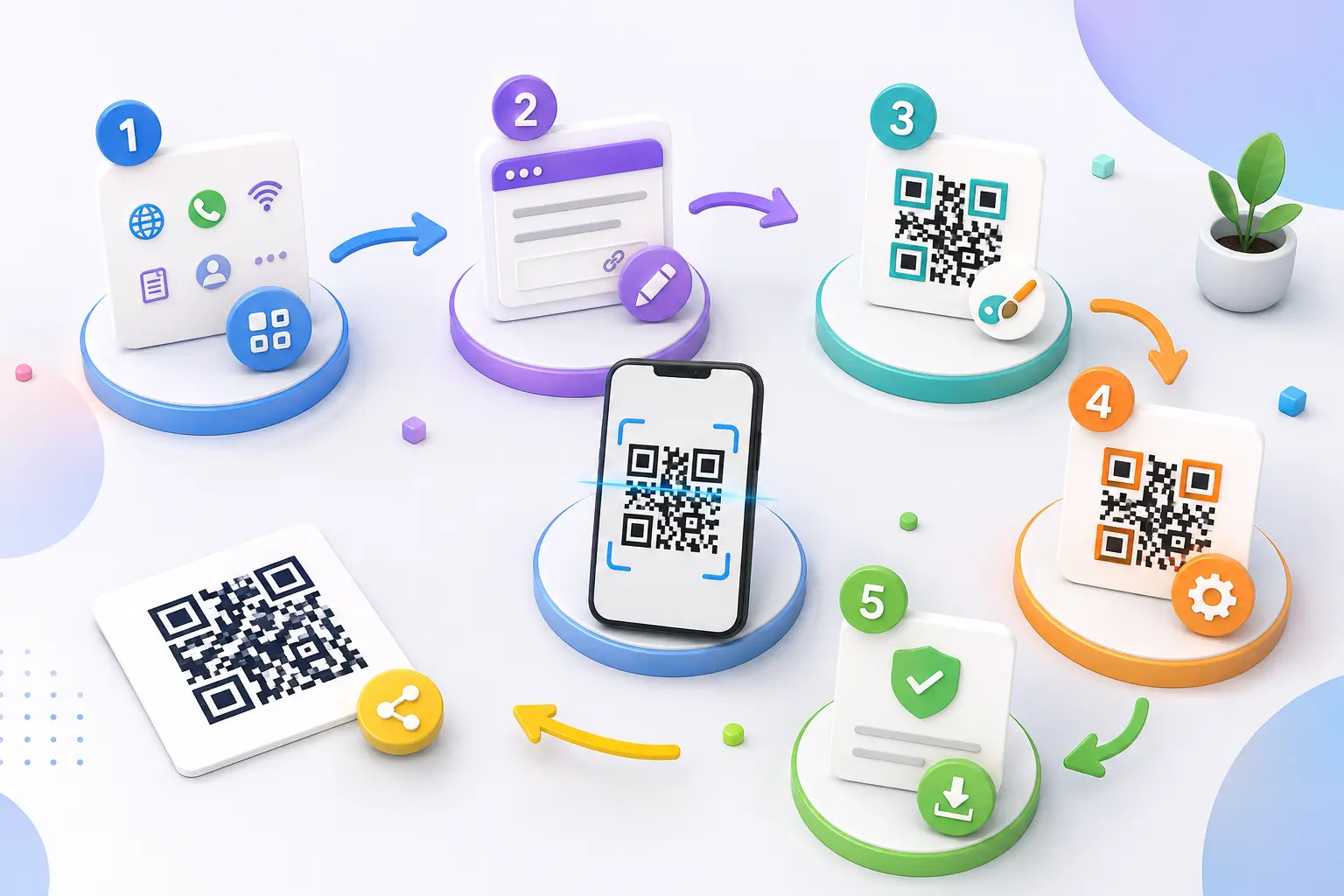
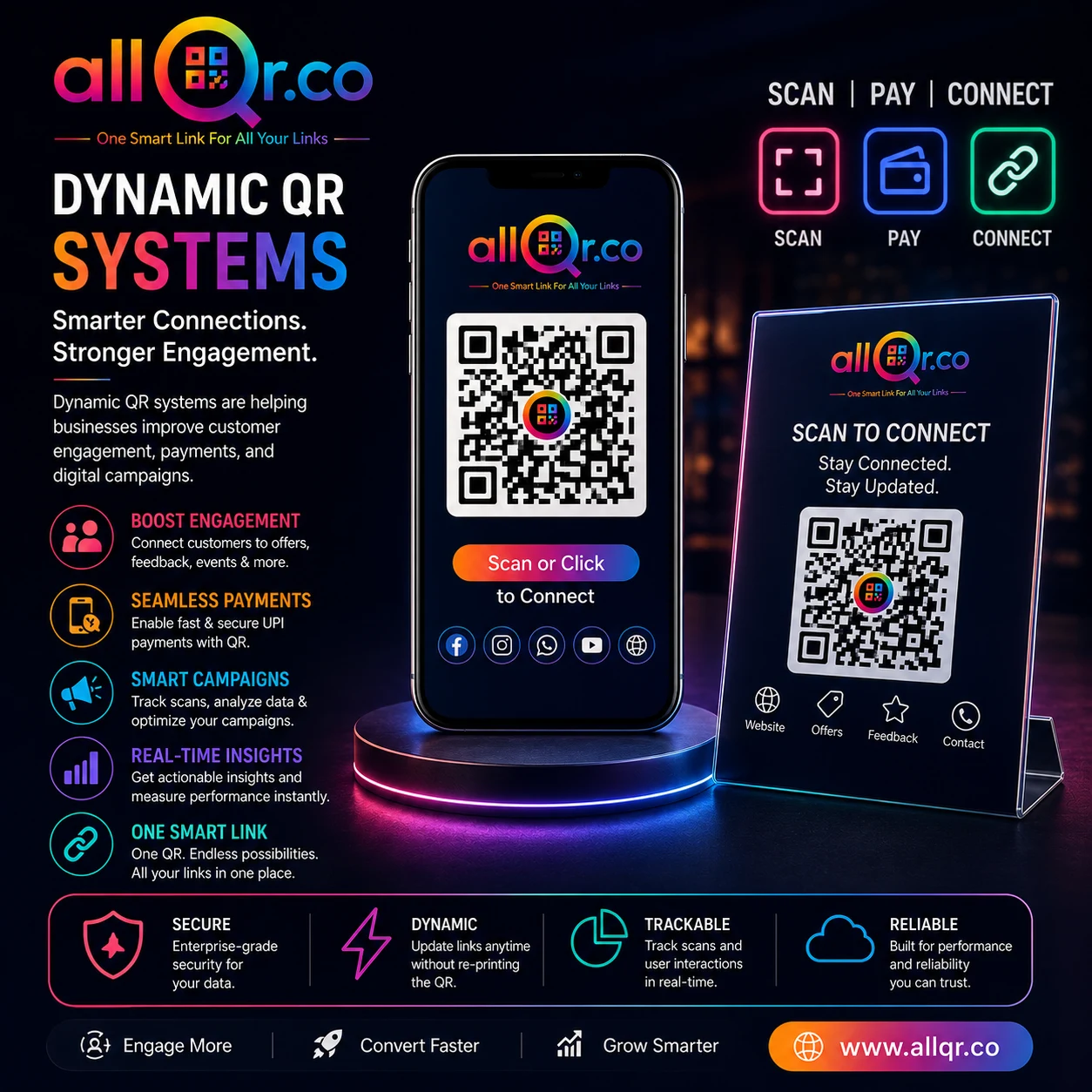
You can also connect your bio page to a QR code.
This is particularly useful when you want to connect offline audiences with your online presence.
For example, a photographer could place a QR code on a business card:
Scan to View My Portfolio
The QR code opens the photographer's bio page, where visitors can access the portfolio, Instagram, WhatsApp, booking form, and other links.
The same approach can work for:
- Restaurants
- Retail stores
- Events
- Exhibitions
- Business cards
- Product packaging
- Flyers
- Conferences
Instead of printing several URLs, businesses can use one QR code that leads to their complete digital profile.
Why Branding Matters
Your bio page is often one of the first places people interact with your brand after discovering you on social media.
A generic page can feel disconnected from the rest of your business.
That's why customization matters.
Depending on the platform, you may be able to use:
- Brand colors
- Logo
- Custom username
- Profile image
- Custom buttons
- Background themes
- Branded links
For example, a jewellery brand can use its logo, brand colors, product links, WhatsApp contact, and Instagram profile on the same page.
The result feels much more like a small branded website than a random collection of links.
Analytics Can Show What Your Audience Actually Wants
Another advantage of modern link-in-bio platforms is link tracking and analytics.
Instead of simply sharing a collection of links, you can understand which ones people actually use.
Depending on the platform, analytics may show:
- Profile visits
- Link clicks
- Popular buttons
- Traffic sources
- Device information
- Engagement trends
Real-world example
Suppose a creator has these five buttons:
- YouTube
- Online Course
- Portfolio
After a few weeks, analytics might show that the online course gets significantly more clicks than the other links.
That information can help the creator decide where to place the course button, which content to promote, and where to focus future campaigns.
So analytics turns a simple link page into a useful marketing tool.
How a Link-in-Bio Page Can Improve User Experience
The biggest benefit isn't necessarily the number of features.
It's convenience.
When someone visits your profile, they shouldn't have to ask:
“Where should I click?”
A well-organized page answers that immediately.
For example:
Welcome to ABC Photography
1. View Portfolio
2. Book a Session
3. WhatsApp
4. YouTube
5. Studio Location
Everything important is visible in one place.
That can make the journey from discovering your brand → taking action much smoother.
Who Can Benefit From a Link-in-Bio Platform?
Almost anyone who shares multiple online destinations can use one.
Creators & Influencers
Combine social profiles, videos, affiliate links, products, and contact information.
Freelancers
Show portfolios, services, testimonials, booking links, and contact details.
Small Businesses
Connect customers to websites, WhatsApp, stores, menus, and locations.
Restaurants & Cafés
Share menus, ordering links, reservations, directions, and social profiles.
Event Organizers
Provide registration, event details, maps, tickets, and social channels.
Online Sellers
Connect product pages, marketplaces, payment options, and customer support.
FAQ – Link-in-Bio Platforms
1.What is a link-in-bio platform?
A link-in-bio platform lets you create one shareable page containing multiple links to your social profiles, website, products, contact options, and other online destinations.
2.Why do creators use link-in-bio pages?
Creators use them to organize multiple online profiles and important links under one URL, making it easier for followers to find their content and take action.
3.Can businesses use link-in-bio platforms?
Yes. Businesses can use them to connect websites, WhatsApp, product catalogs, booking pages, menus, social profiles, and other customer-facing resources.
4.Can I add a QR code to my link-in-bio page?
Yes, depending on the platform. A QR code can direct people to your bio page, making it useful for business cards, packaging, events, posters, and offline marketing.
5.Are link-in-bio pages mobile-friendly?
Most modern link-in-bio platforms are designed primarily for mobile visitors because many users discover them through social media apps.
6.Can I track clicks on my links?
Many platforms provide analytics that can show profile visits, link clicks, and other engagement information. The exact analytics available depend on the platform.
Conclusion
Your audience shouldn't have to search across five different platforms to find you.
A link-in-bio platform gives creators and businesses a simple way to bring their important online destinations together under one shareable link.
Whether you're a photographer sharing a portfolio, a restaurant promoting its menu, or a creator selling an online course, the idea is the same:
One link. Multiple destinations. Less friction.
And when that link can also connect to a branded page, QR code, and useful analytics, it becomes more than just a social-media link — it becomes a small digital hub for your brand.